
Fire Campus
Heating and ventilation systems are central to maintaining a safe and comfortable indoor environment. According to NFPA 101®, Life Safety Code®, heating, ventilating, and air-conditioning equipment must comply with the requirements of Section 9.2, which encompasses vital safety standards for installation and operation.
This includes not only the general installation requirements but also specific guidance for different occupancy types, such as residential, business, or detention facilities. By adhering to these standards, property owners ensure that their systems are both safe and effective in providing temperature control and fresh air.
A key requirement found in NFPA 90A®, Standard for the Installation of Air-Conditioning and Ventilating Systems, is that heating and cooling equipment must be installed according to both the applicable NFPA standards and the manufacturer’s instructions. This means equipment should be properly located, supported, and connected, considering fire protection and life safety features.
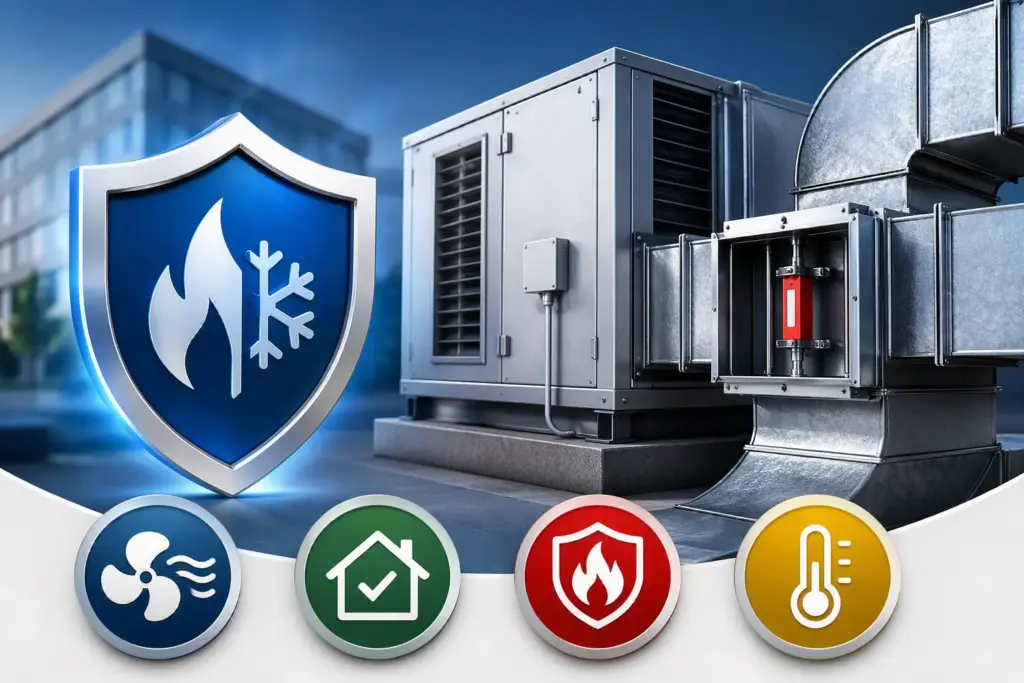
For example, fire and smoke dampers within ductwork must be equipped with fusible links or heat-sensitive devices that activate at the appropriate temperature. The temperature ratings of these devices are specifically regulated: they must be set at least 71°C (160°F) or approximately 28°C (50°F) above the maximum normal operating temperature, preventing premature activation or failure in case of a fire.
Another important aspect is protection against combustion hazards. Where fuel-fired heaters are used, NFPA 101 requires them to be chimney or vent connected, take air for combustion directly from outside, and provide complete separation between the combustion system and the occupied area. Additionally, safety devices are required to immediately stop the flow of fuel and shut down the equipment if excessive temperatures or ignition failure are detected.
These features help prevent the ignition of combustible materials and safeguard occupants from the risks associated with heating systems. By following NFPA provisions, customers can be confident their heat and ventilation systems are designed and operated with safety and compliance in mind.