
Fire Tips
Fire protection systems are only as reliable as the programs that support them. Regular compliance reviews help ensure that fire pumps, sprinkler systems, valves, and other critical components remain ready to perform when needed most.
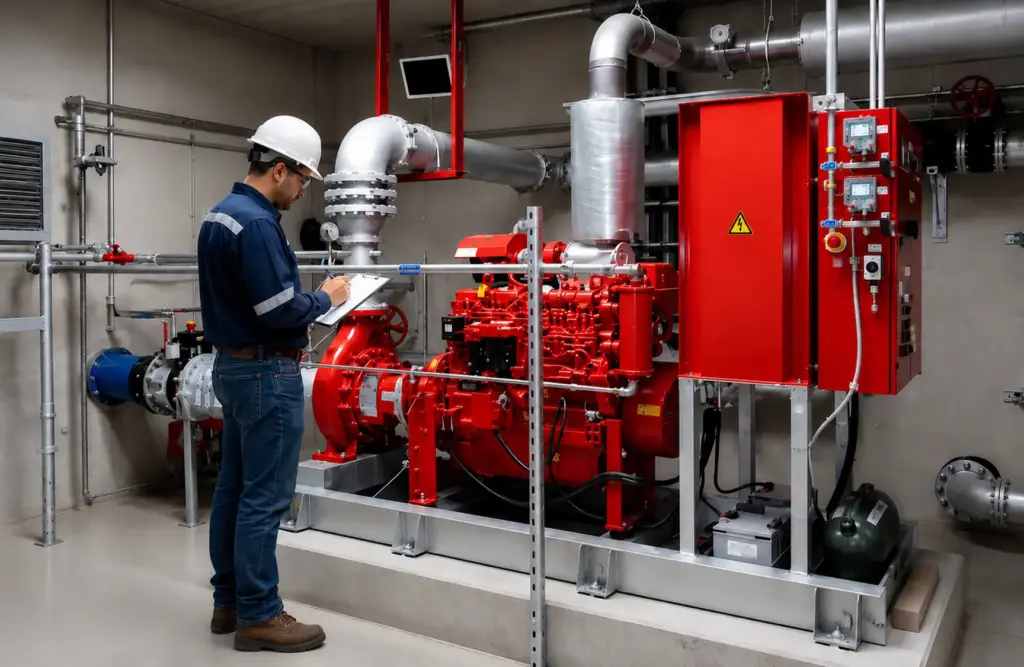
By evaluating maintenance records, impairment procedures, emergency contacts, third-party inspection requirements, and personnel training, facilities can strengthen safety, reduce risk, and maintain compliance with NFPA 25 requirements.
1. Audit Maintenance Logs
Review all inspection, testing, and maintenance records for water-based fire protection systems, including fire pumps, sprinkler systems, valves, and related components. NFPA 25 requires records to identify the activity performed, the organization responsible, the required frequency, the date and results, and the qualified contractor or owner personnel who completed the work. For fire pumps, verify that periodic inspection, testing, and maintenance are coordinated with the requirements of NFPA 25, as referenced by NFPA 20.
2. Review Impairment Procedures
Confirm that plant teams understand how to respond when a fire protection system is out of service, including planned shutdowns and emergency conditions such as a ruptured pipe, operated sprinkler, interrupted water supply, or equipment failure. Procedures should define who authorizes the impairment, what notifications are required, how protection is restored, and how the impairment is documented. NFPA 25 requires notification of the authority having jurisdiction, the fire department where required, and the alarm-receiving facility when an impairment is identified or before a system or its supply is tested or shut down.
3. Update Emergency Contacts
Confirm that emergency contact information for the facility’s responsible representative, fire protection contractor, authority having jurisdiction, fire department, alarm-receiving facility, fire pump service provider, and other designated responders is current. This supports timely notification when a fire protection system is impaired or when testing or shutdown activities are planned. Verify that the list is available to control-room personnel, maintenance staff, security personnel, and supervisors who may need to initiate the impairment process.
4. Schedule Third-Party Inspection
Determine which inspection, testing, and maintenance activities must be assigned to qualified personnel and schedule a qualified fire protection service provider when the plant does not have appropriately trained personnel available. NFPA 25 requires inspection, testing, and maintenance to be performed by personnel qualified for the specific tasks being performed. An inspection, testing, and maintenance service is described as a service in which qualified personnel inspect and test system components at the required frequencies and maintain them as necessary. Confirm the provider’s qualifications are acceptable to the authority having jurisdiction and retain the resulting reports with the facility’s compliance records.
5. Review Training Records
Verify that employees assigned to inspect, test, maintain, operate, or manage impairments of fire protection systems have current, task-specific training and documented qualifications. NFPA 25 defines qualified personnel as competent and capable individuals who have met the applicable requirements and training for their field and are acceptable to the authority having jurisdiction. (Compare training records with each employee’s assigned responsibilities, identify expired or missing credentials, and schedule refresher training or qualified contractor support where necessary.