
Fire Campus
NFPA 20, Standard for the Installation of Stationary Pumps for Fire Protection, addresses the risks associated with corrosion in fire pump systems. Corrosive environments and fluids can significantly impact the reliability and longevity of fire protection equipment. The standard provides requirements and guidance for material selection, component protection, and evaluation of the installation environment to mitigate corrosion-related issues.
Pump Materials and Corrosion Resistance Section 8.1.4 of NFPA 20 mandates that materials used in pump construction must be specifically selected based on the corrosion potential of the environment, fluids used, and operational conditions. This is to ensure the reliability and structural integrity of fire pump systems under a variety of environmental exposures, including corrosive atmospheres and water sources.
The standard refers to the definition in Section 3.3.13, noting that corrosion-resistant materials include brass, copper, stainless steel, or other materials that withstand corrosion damage caused by oxidation or other chemical reactions. The use of such materials helps minimize the risk of failure or degradation in service due to corrosive factors, safeguarding critical fire protection infrastructure.
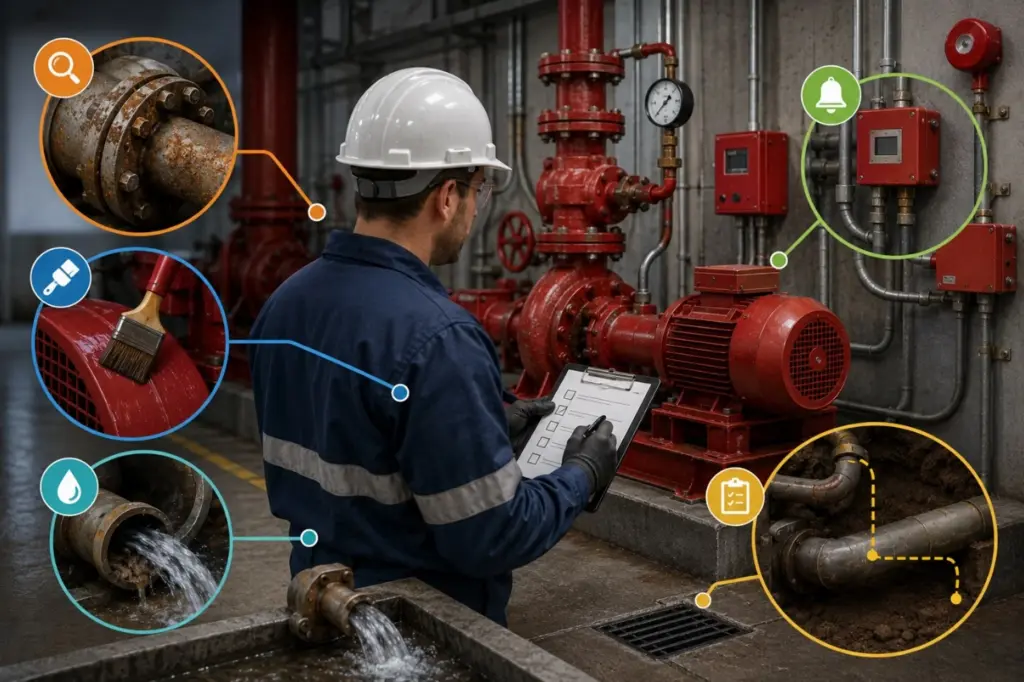
Evaluating Water for Corrosiveness
Annex A (A.7.2.7) of NFPA 20 recommends an analysis of the water source before the pump is ordered. The analysis should consider factors including pH, the presence of corrosive salts (like chlorides), and harmful gases such as carbon dioxide (CO2) or hydrogen sulfide (H2S). If the water is deemed corrosive, the pumps should be constructed of suitable corrosion-resistant materials or treated with protective coatings as recommended by the manufacturer. This preventive step helps to ensure the proper functioning and long service life of the fire pump installation, even under harsh chemical conditions.
Protection of Piping Against Corrosion
Corrosion control does not end at the pump—Annex A (A.4.16.1) addresses the protection of suction piping, especially steel pipes. Exterior surfaces should be painted, and buried iron or steel pipe must be lined, coated, or otherwise protected in accordance with standards such as AWWA C104/A21.4. These requirements help prevent external and internal corrosion, extending the life of the piping and maintaining the integrity of the fire protection water supply.
Conclusion
NFPA 20 emphasizes the importance of proper material selection and protective measures to combat corrosion and its effects on fire pump systems. These requirements and recommendations, including evaluation of environmental and water conditions as well as the use of corrosion-resistant materials and protective coatings, are essential to ensure system reliability and safety throughout the service life of fire protection installations.